Recommended Pedals
The essential Synth pedals to know about
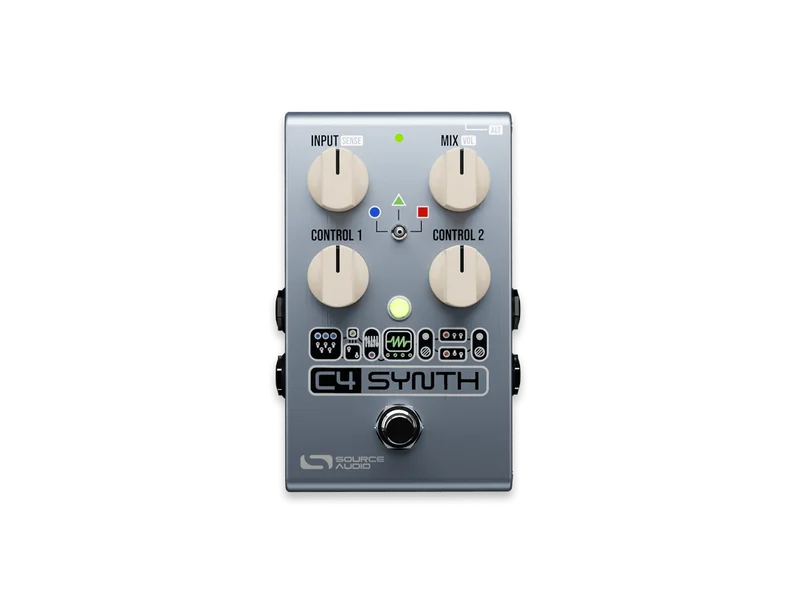
Source Audio C4 Synth
Four independent voices, 128 presets, MIDI control, and the flexibility of Eurorack-style synthesis in a pedal. The definitive guitar synth for players who want unlimited possibilities.
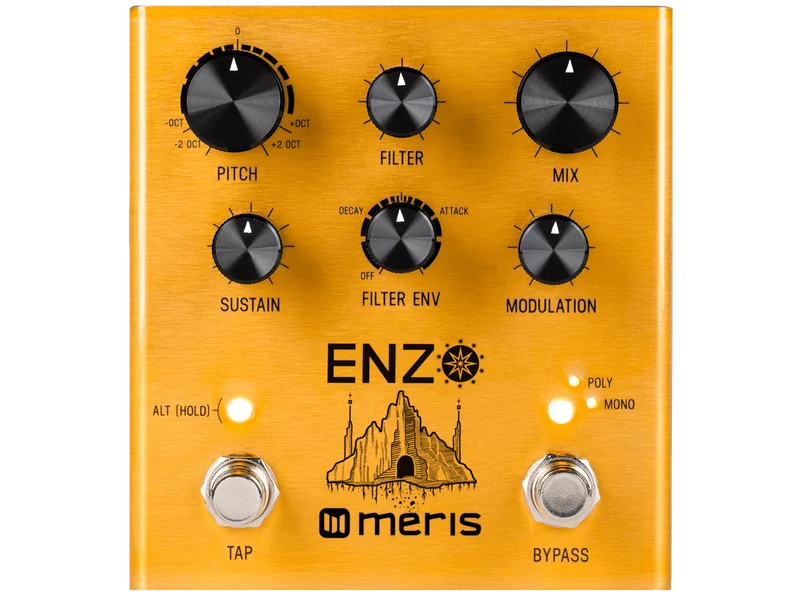
Meris Enzo Synth
Three distinct modes (Poly, Mono, Arp) cover every synth application. Built-in delay, compressor, and filter envelope make it a complete sound design tool. Intuitive interface that rewards exploration.
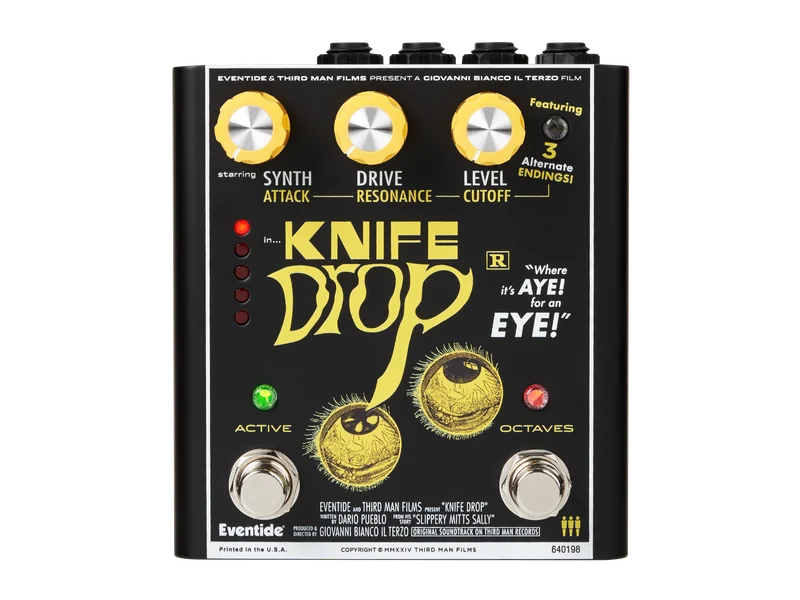
Eventide Knife Drop
Collaboration with Third Man Hardware creates uniquely dark synth character. Analog fuzz + sub-octave + monophonic synth in one compact pedal. Jack White-designed presets provide instant inspiration.
Electro-Harmonix POG2
Flawless polyphonic tracking generates four independent octave voices. The industry standard for octave-based synth textures. Attack control enables lush pad swells.
Eventide H90 Harmonizer
When you need synth alongside world-class reverbs, delays, and modulation. UltraTap and other algorithms create synth-like textures. The swiss army knife of pitch and time-based effects.
The guitar synthesizer occupies a unique space in effects—they're not shaping your guitar tone, they're replacing it with something entirely different. Where overdrives color your sound and reverbs add space, a guitar synth fundamentally transforms your instrument into something else: an organ, a lead synth, a bass, a pad, an alien sound that has nothing to do with guitar. This transformation is both the appeal and the challenge. Done well, guitar synths unlock sonic territory that would otherwise require a keyboard. Done poorly, they create unplayable garbage. Understanding how they work—and which one fits your needs—makes the difference between frustration and revelation.
How Guitar Synths Actually Work
A guitar synthesizer does something deceptively complex: it listens to your guitar, analyzes the pitch of whatever you're playing, and generates a synthesized sound based on that pitch. The key word is 'analyzes'—because how accurately the synth tracks your pitch determines whether it feels responsive or sluggish.
Pitch Tracking: The Foundation of Everything
Pitch tracking is the process by which the synth identifies the frequency of your note. This happens thousands of times per second, analyzing the incoming audio to determine what pitch you're playing. The accuracy and speed of this tracking determines how responsive the synth feels.
Latency is the delay between when you play a note and when you hear the synth respond. Even 10-15ms of latency makes a synth feel disconnected from your playing—there's a slight delay between your picking and the sound. Professional guitar synths minimize latency to imperceptible levels (under 5ms). Budget options often struggle with this.
Tracking accuracy determines whether the synth produces the pitch you intend. Poor tracking means the synth generates the wrong note, or jumps between notes unpredictably. This is especially problematic during fast passages, bends, vibrato, and hammer-ons/pull-offs.
Pitch range matters too. Some synths track bass frequencies well but struggle with high notes; others handle high notes but lose low-end tracking. Know your playing range and verify the synth handles it.
Polyphonic vs. Monophonic: A Fundamental Choice
This is the most important decision when choosing a guitar synth.
Polyphonic synthesis tracks multiple notes simultaneously. You can play chords, harmonies, and complex fingerings—the synth handles all of them. This is essential for organ-style playing, pads, and any situation where you want to preserve harmonic content. The Meris Enzo's Poly mode and the Source Audio C4's polyphonic capabilities exemplify this approach.
Monophonic synthesis tracks one note at a time. Play a chord and the synth plays only the lowest (or highest) note. This is how classic analog synths worked, and it's still preferred for lead work, bass lines, and aggressive single-note phrases. The Eventide Knife Drop's synth section is monophonic by design.
Why this matters: A polyphonic synth can do everything a monophonic synth can do (you can play single notes), but monophonic synths can't play chords. However, monophonic tracking is often faster and more accurate, since tracking one note is simpler than tracking several simultaneously.
Sound Generation: The Engine Behind the Magic
Once the synth knows what pitch you're playing, it generates a sound based on that pitch. This is where synths diverge dramatically in character.
Oscillator-based synthesis generates sounds using oscillators—electronic signal generators that produce waveforms (sine, saw, square, triangle). The combination of waveforms, their harmonics, and how they're filtered and modulated creates the synth's character. This is classic subtractive synthesis.
Wavetable synthesis uses tables of waveform samples, interpolating between them to create evolving timbres. This is how the Source Audio C4 achieves its vast sonic range—thousands of possible waveforms at your control.
Sample-based synthesis uses recordings of real synthesizer sounds, pitch-shifting them to match your playing. This can sound extremely authentic but requires large sample libraries.
Hybrid approaches combine multiple techniques. The Meris Enzo, for instance, uses digital processing to generate classic synth textures while adding its own unique character.
Understanding Synth Controls
Guitar synths vary widely in their control schemes, but several parameters appear repeatedly.
Filter and Envelope
The filter is the heart of most synth sounds. It removes frequencies from the oscillator signal, creating the characteristic synth 'wah' and 'weep' sounds. Common types:
- Low-pass filter (LPF): Removes high frequencies, letting bass through. The classic warm synth sound. Cutoff frequency determines brightness.
- High-pass filter (HPF): Removes low frequencies. Used for thin, aggressive sounds.
- Band-pass filter (BPF): Lets only a specific frequency range through. Nasal, telephone-like quality.
Envelope controls how the filter responds over time:
- Attack: How quickly the filter opens when you play a note
- Decay: How quickly the filter closes after reaching its peak
- Sustain: The filter level held while you're playing
- Release: How quickly the filter closes after you stop playing
The Meris Enzo features dedicated Filter and Filter Envelope controls, allowing precise shaping of your synth's filter characteristics.
Oscillator Controls
Beyond the filter, oscillators define your synth's base character:
- Waveform selection: Choose between sine (pure), saw (bright, aggressive), square (hollow, clarinet-like), triangle (softer, flute-like)
- Detune: Slightly offset multiple oscillators from each other, creating chorus-like thickness
- Octave: Shift the generated pitch up or down from your input
- Sub oscillator: Generate a lower octave for extra bass weight
The Source Audio C4 offers three oscillator types (sine, square, saw) with independent control over each, plus 14 LFO wave shapes for modulation.
Modulation and Expression
LFO (Low Frequency Oscillator) creates cyclic modulation:
- Vibrato (pitch modulation)
- Tremolo (volume modulation)
- Filter sweeps (filter cutoff modulation)
Expression pedal input allows real-time control of any parameter:
- Foot-controlled filter sweeps
- Dynamic pitch bends
- Morphing between different sounds
Most serious synth players connect an expression pedal—it's the difference between static presets and living, breathing sounds.
Signal Chain: Where Synths Belong
Synth placement in your signal chain requires careful thought.
Before Drives and Distortion
Some players place their synth early in the chain, before gain stages. This can work if you're running a clean signal, but:
Pros: Natural guitar dynamics control the synth. Easier to maintain tracking accuracy.
Cons: Gain stages before the synth can muddy pitch tracking. Distortion makes it harder for the synth to analyze your pitch accurately.
After Clean Boosters
A cleaner approach: place the synth after any clean boosters but before dirt. This gives you a clear signal for tracking while allowing you to boost into the synth for stronger output.
After Your Gain Stages
Counterintuitive, but many players run synths after their dirt. The heavily saturated signal still tracks, and you get synth sounds that incorporate your pedalboard's character.
Pros: Creates unique textures. Synth follows your playing dynamics through your gain staging.
Cons: Tracking accuracy can suffer with heavily distorted signals. Noise from drives gets synthesized too.
After Everything: The Clean Output Approach
Some players use a wet/dry setup: their normal guitar signal goes through the full chain, while the synth processes a clean, isolated feed. This requires either two amps or a mixer that blends both signals.
Pros: Perfect tracking. No compromise between your main tone and your synth.
Cons: Complex setup. Requires additional equipment.
Playing Technique: Synths Reward Precision
Guitar synths demand different playing techniques than standard guitar.
Picking Dynamics
Synths respond to picking intensity in different ways depending on their design. Some map dynamics to volume; others map them to filter brightness or modulation depth. Understanding your specific synth's response helps you control it musically.
Note Clarity
Clear, defined notes track better than slurred passages, bends, or vibrato. Hammer-ons and pull-offs can confuse tracking. Clean picking technique—individual notes with clear attack—produces the best results.
Chord Voicings
Polyphonic synths handle chords, but simple voicings track better than complex jazz chords. Triads and power chords track reliably; extended harmonies (7ths, 9ths) can confuse some systems.
String Crossing
Crossing between strings mid-phrase challenges tracking. Single-string lines track perfectly; rapid string-crossing can cause pitch confusion.
Bends and Vibrato
These express yourself techniques challenge monophonic synths particularly. The pitch is continuously changing, and the synth must decide what pitch to synthesize. Some handle this gracefully; others latch onto random overtones.
Types of Guitar Synth Experiences
Guitar synths fall into several categories based on what they prioritize.
Pure Synth Engines
These are dedicated synth processors that generate synthesized sounds from your guitar input. They don't do much else—they just do synth really well.
Source Audio C4 Synth: The most comprehensive pure synth engine available. Four independent voices, 128 presets, MIDI control, expression pedal support, and the sonic depth of Eurorack-style synthesis. If you want unlimited sonic possibilities in a pedal, this is it.
Meris Enzo: More immediate and musical than the C4, with three distinct modes (Poly, Mono, Arp) that cover most synth applications. Built-in delay and compressor add production tools. The interface is more intuitive than the C4, making it faster to dial good sounds.
Multi-Effects with Synth
These are comprehensive processors that include synth capabilities alongside other effects. They're less deep than dedicated synths but offer more versatility.
Eventide H90 Harmonizer: The H90's synth algorithms—particularly the UltraTap Synth and PitchFlex—create synth-like textures that work alongside world-class reverb, delay, and modulation. Not a pure synth experience, but extraordinarily flexible.
Octave-Based Textures
While technically categorized separately, octave generators often produce synth-like textures.
Electro-Harmonix POG2: The industry standard for octave-based synth textures. Generate -2, -1, +1, and +2 octave voices, blend them independently, and use the attack control for pad-like swells. Not a 'synth' in the traditional sense, but the sounds it produces are synth-adjacent.
Fuzz-Synth Hybrids
These pedals combine distortion/fuzz character with synth-like pitch generation.
Eventide Knife Drop: Collaboration with Third Man Hardware creates a uniquely aggressive synth character. Analog fuzz + sub-octave + monophonic synth. Dark, thick, and aggressive—the opposite of pristine synth sounds.
Getting the Best Tracking
Tracking quality varies dramatically between synths and depends heavily on how you set them up.
Optimize Your Input Signal
- Use the hottest signal your guitar can provide without clipping
- Single-coils might need a boost; high-output humbuckers might need backing off
- Place a clean booster before the synth if your guitar signal is weak
- Check that your guitar's intonation is accurate—out-of-tune guitars confuse trackers
Minimize Competing Frequencies
- Monophonic tracking improves with single notes rather than chords
- Simple intervals (octaves, fifths) track better than complex harmonies
- Fast passages need clear attack; legato can confuse some trackers
Consider Your Pickups
- High-output pickups (like humbuckers) often track better
- Single-coils can work but may need more gain
- Piezo pickups (on acoustic-electric guitars) track well but have unique timbre
Practice the Instrument
Synth playing is a skill separate from guitar. Practice:
- Playing single notes with clear attack
- Controlling dynamics consistently
- Simplifying chord voicings
- Anticipating note changes
Common Problems and Solutions
Problem: Tracking Is Inaccurate or Laggy
Causes: Weak input signal, too much gain before the synth, budget tracking algorithm
Solutions: Boost your signal before the synth, reduce gain stages before it, try a different playing position, consider a higher-quality synth
Problem: Wrong Notes or Pitch Jumping
Causes: Complex chords, bends, vibrato, poor intonation, tracking algorithm confusion
Solutions: Simplify chord voicings, practice cleaner technique, check guitar intonation, try monophonic mode instead of polyphonic
Problem: Synth Sound Is Thin or Weak
Causes: Wrong oscillator settings, filter cutting too much, lack of sub oscillator, mixing dry signal too low
Solutions: Add sub oscillator, open filter, try different waveforms, increase synth level relative to dry
Problem: Expression Pedal Doesn't Work
Causes: Wrong expression pedal type (speak with synth manufacturer for compatibility), expression pedal not connected properly, expression assignment incorrect
Solutions: Verify expression pedal compatibility, check connection, consult manual for expression routing
The Bottom Line
Guitar synthesizers transform your instrument into something entirely different. Done well, they open sonic territories impossible on keyboard—your playing dynamics, your personal phrasing, your unique voice translated through synth architecture.
The Source Audio C4 Synth offers the deepest synthesis engine available in a pedal. Four voices, 128 presets, MIDI, expression control—it's the choice for players who want Eurorack depth in stompbox form.
The Meris Enzo Synth provides a more immediate, musical experience with three distinct modes that cover most applications. The built-in delay and compressor make it a complete production tool.
The Eventide Knife Drop carves its own niche: dark, aggressive, analog-synth character for players who want synth textures that sound like nothing else.
For octave-based textures, the Electro-Harmonix POG2 remains the benchmark—flawless polyphonic tracking, four independent octave voices, and attack control for pad-like swells.
And when you need synth alongside comprehensive effects processing, the Eventide H90 Harmonizer delivers with algorithms that blur the line between effect and instrument.
The right synth for you depends on your priorities. If you want maximum sonic range, the C4. If you want immediate musicality, the Enzo. If you want dark aggression, the Knife Drop. Whichever you choose, understand that synth playing is a skill that develops over time. Start with simple single-note lines, build up to chords and complex phrases, and practice until the synth responds to your playing like an extension of your voice.
Genre-Specific Applications
Ambient and Post-Rock
Ambient guitarists use synths differently than other players—they rarely want obvious synth sounds. Instead, they're after texture, atmosphere, and expanded tonal palette. The goal is enhancement, not transformation.
Approach: Use polyphonic mode for chord voicings. Set long attack times for pad-like swells. Blend dry guitar with synth for textural depth rather than full substitution. Reverb through the synth creates infinite soundscapes.
Recommended settings: Low-pass filter with slow envelope. Attack at 70-100% for gradual swelling. Mix 30-50% synth with your dry signal. Add reverb and delay after the synth for spatial depth.
Gear recommendation: Electro-Harmonix POG2 excels at ambient octave textures. Meris Enzo in Poly mode with slow attack creates lush pads. Source Audio C4 wavetable options provide endless textural possibilities.
Progressive Rock and Metal
Prog and metal players use synths for aggressive lead sounds, unusual textures, and adding orchestral or synthesizer elements impossible on standard guitar.
Approach: Monophonic mode for tight tracking on fast passages. Use synth leads that cut through dense mixes. Add subtle synth textures under distorted guitar for thickness without obscuring your core tone.
Recommended settings: High-pass filter to remove muddiness. Fast attack for immediate response. Moderate sustain for natural decay. Layer with your distorted guitar at lower levels.
Gear recommendation: Eventide Knife Drop for aggressive, dark lead tones. Meris Enzo in Mono mode for tight, responsive leads. Source Audio C4 for programmable sequenced patterns.
Funk and R&B
Funk guitarists use synths for church organ tones, clavinet sounds, and bright, cutting textures that cut through busy arrangements.
Approach: Polyphonic mode for chord stabs and comping patterns. Bright filter settings that cut through mixes. Fast, staccato attack that matches funk playing style.
Recommended settings: High-pass or band-pass filter for brightness. Short attack and decay for percussive response. Mix 50-70% synth for obvious, present sounds.
Gear recommendation: Meris Enzo with filter envelope for responsive, percussive synth tones. Source Audio C4 for programmable patterns and rhythmic sequences.
Jazz and Fusion
Jazz guitarists approaching synth need organic, musical results that complement rather than replace acoustic warmth.
Approach: Polyphonic mode for chord voicings and walking bass lines. Warm filter settings that preserve low-end. Subtle mixing that enhances rather than transforms your sound.
Recommended settings: Low-pass filter with moderate cutoff. Slow envelope for smooth response. Mix 20-40% synth to maintain acoustic character.
Gear recommendation: Meris Enzo for musical, warm polyphonic tones. POG2 for octave textures that enhance rather than replace your jazz guitar sound.
Electronic and Experimental
Experimental players use synths as primary sound design tools, pushing them into territories their designers never imagined.
Approach: Explore every parameter. Use expression pedals and CV inputs for real-time control. Layer multiple synth voices for complex textures. Process synth output with other effects for unprecedented sounds.
Recommended settings: Full parameter exploration. Extreme filter settings. Complex LFO modulation. Full wet mixing.
Gear recommendation: Source Audio C4 for unlimited sonic possibilities. Eventide H90 for processing synth output with other effects. Meris Enzo for immediate tactile exploration.
Advanced Techniques
Expression Pedal Integration
An expression pedal transforms a static synth into a living instrument. Most synths assign expression to any parameter—here is how to use it musically:
Filter sweeps: The classic synth move. Connect expression to filter cutoff and sweep manually for wah-like effects. Combine with your playing for organic filter movements.
Pitch bends: Some synths allow expression to control pitch, creating keyboard-style pitch bend on your guitar. Works best for subtle bends rather than dramatic whammy effects.
Mix morphing: Connect expression to wet/dry mix and sweep between your guitar and synth sound continuously. Creates seamless transitions between your core tone and synth textures.
Decay control: Expression-controlled decay creates swelling effects impossible with envelope settings alone. Build intensity with your foot while playing.
MIDI and Computer Integration
Modern synths communicate via MIDI, opening possibilities beyond what pedal controls allow:
MIDI control change: Map any parameter to MIDI CC messages. Control synth parameters with MIDI foot controllers, sequencers, or computer software.
MIDI clock sync: Sync LFO rates, arpeggiators, and envelope times to MIDI clock. Keeps your synth in time with drum machines, sequencers, or DAWs.
Preset switching: MIDI program changes recall specific presets instantly. Build setlists with exact sounds for each song.
DAW integration: Connect synth to your DAW via USB MIDI. Automate parameter changes in your DAW timeline. Use DAW plugins to process synth audio.
Wet/Dry Rig Setup
The ultimate synth setup separates your dry guitar from the synth processing, allowing independent control and mixing:
Signal flow: Guitar splits to two paths—one clean to your amp, one through the synth to a separate amp or the PA. Mix both signals in your amp or at the console.
Benefits: Your dry guitar always tracks perfectly without compromise. Synth processes a clean signal for maximum accuracy. You control the balance between authentic guitar and synth transformation.
Implementation: Use an A/B/Y box or mixer to combine signals. Some players use two amps; others run one amp dry and one amp wet. In the studio, use a small mixer to blend signals before recording.
Stacking and Layering
Multiple synths or synth with other effects create complex textures:
Synth stacking: Run two synths in parallel, each generating different sounds from your guitar. Mix both for complex, harmonically rich textures.
Synth with pitch shifting: Combine a pitch shifter with a synth. Pitch your guitar up while the synth generates low bass. Hear your lead line over a synthesized bass.
Synth with reverb: Run synth output through a lush reverb pedal or rack. Creates massive, spacious synth sounds impossible from the synth alone.
Synth with delay: Add rhythmic delay after the synth. Creates sequenced, patterned synth textures. Eventide H90 ResEcho or Source Audio Nemesis delay both work.
Understanding Your Playing Style
Lead Guitarists
Lead players need synths that track single-note lines flawlessly and produce cutting lead tones. Prioritize tracking accuracy and bright, present lead sounds.
What you need: Monophonic tracking at minimum. Fast response to bends and vibrato. Filter settings that cut through dense mixes. Expression control for real-time pitch or filter movement.
Recommended approach: Use mono mode for maximum tracking speed. Set filter for brightness and presence. Practice controlling dynamics through the synth—synth leads require different picking intensity than guitar leads.
Rhythm and Chording Players
Rhythm guitarists need polyphonic tracking that handles chords and complex voicings. Prioritize chord clarity and mix-compatible sounds.
What you need: Polyphonic tracking for multiple simultaneous notes. Simple voicings that track reliably (triads, seventh chords). Warm filter settings that blend with other instruments.
Recommended approach: Practice chord voicings that work with the synth. Not all guitar chords translate—simplify where needed. Blend synth with your dry guitar for complete rhythm sounds.
Bass Replacement
Some players use synths to generate bass lines from their guitar, freeing a bass player for other duties or enabling solo performances.
What you need: Sub-octave generation or bass-range tracking. Heavy low-end response. Ability to handle bass frequencies without muddiness. Simple single-note or fifth-based bass patterns.
Recommended approach: Focus on fundamental bass frequencies. Use simple patterns that a bass would play. Layer with your dry guitar for thickness, or use synth exclusively for bass replacement.
Live Synth Price Index
UK & European retailers • Updated daily
| Pedal | Style | Country | Price |
|---|---|---|---|
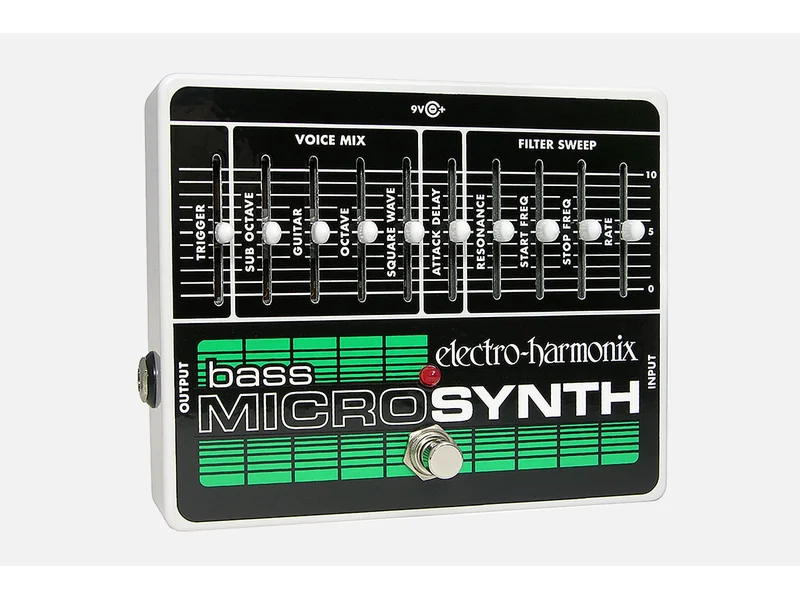
| Electro-Harmonix Bass Micro Synth | Analog | USA | €239 |
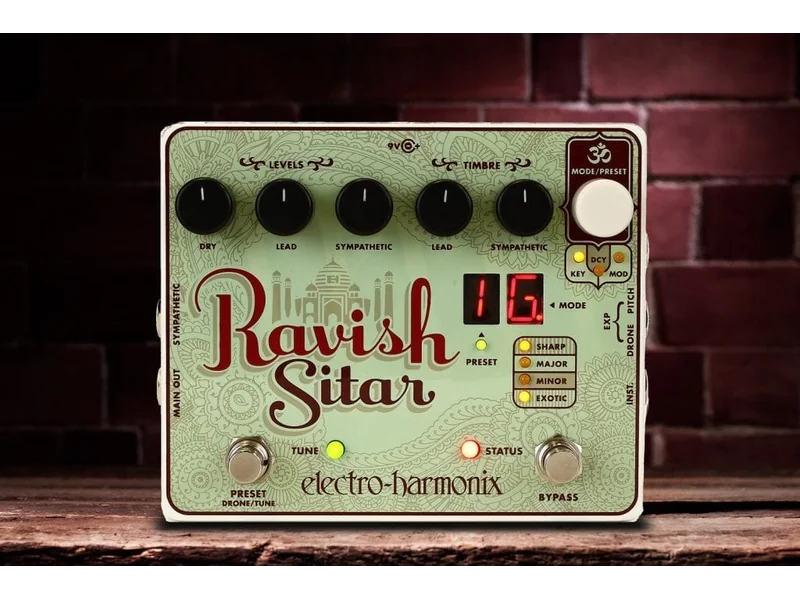
| Electro-Harmonix Ravish Sitar | Polyphonic | USA | €244 |
| Eventide Knife Drop Fuzz Octave Pedal With Monophonic Synth | Monophonic | USA | €329 |
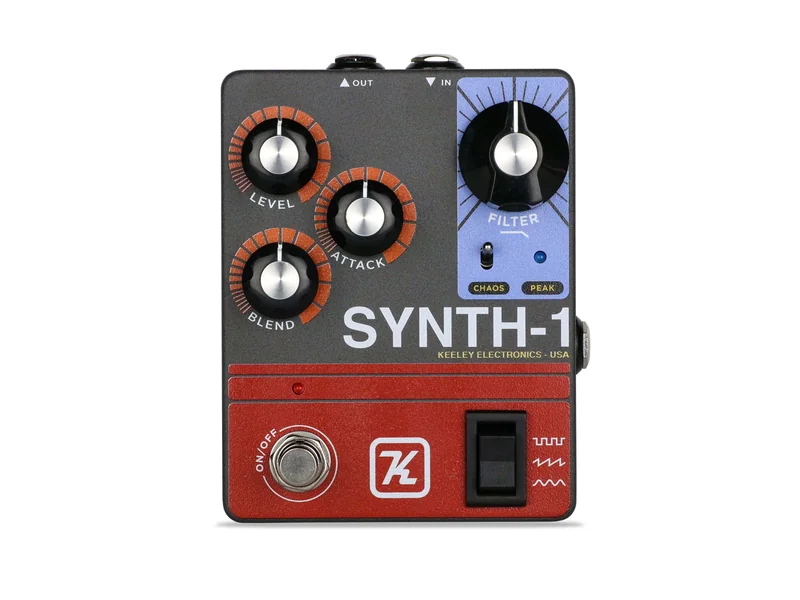
| Keeley Synth-1 | Digital | USA | €208 |
| Meris Enzo Synth | Polyphonic | USA | €337 |
| Source Audio C4 Synth | Multi-voice | USA | €269 |