Recommended Pedals
The essential Tremolo pedals to know about
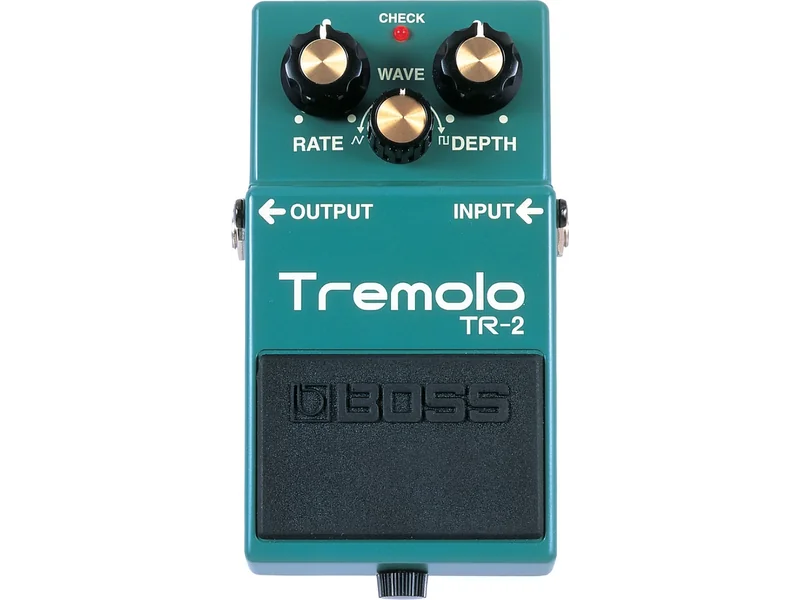
Boss TR-2 Tremolo
Industry standard for warm, musical tremolo. True bypass protects tone. Durable enough for touring. The pedal most professional musicians choose.
Boss TR-2 Tremolo
Boss TR-2 nails the vintage tremolo character. Rate goes fast enough for surf rates (6-8 Hz). Waveform control lets you shape the tone.
Boss TR-2 Tremolo
Simple, intuitive controls. Can dial in subtle texture or obvious effect. Works in any musical context. Trusted by countless touring musicians.
Boss TR-2 Tremolo
Square wave tremolo at fast rates creates aggressive, percussive tone. Perfect for rhythmic, driving riffs. Professional-grade reliability.
Boss TR-2 Tremolo
Tremolo is fundamental effect that adds life to any tone. Boss TR-2 is the reference standard—nothing else to consider really.
Tremolo modulates volume—your pitch stays the same but the volume wavers up and down. It ranges from subtle pulse (barely noticeable) to obvious chop (obviously rhythmic). Tremolo is fundamental to many musical styles.
What Is Tremolo? The Pumping Power of Amplitude Modulation
Tremolo is one of the most recognizable effects in guitar, yet it's often misunderstood. At its core, tremolo is simple: you're modulating the volume of your signal up and down using an LFO. Your guitar stays the same pitch—only the volume changes. This creates the characteristic "wobbling" or "pumping" sound.
Important note: Tremolo is NOT vibrato. Many players confuse the two:
- Tremolo: Volume modulation (amplitude changes)
- Vibrato: Pitch modulation (frequency changes)
Guitar amplifiers have tremolo built-in because it's such a fundamental effect. But pedal-based tremolo gives you control and flexibility that amp tremolo doesn't.
The Physics of Amplitude Modulation
Tremolo works by controlling the loudness envelope of your signal.
How it works:
- Your guitar signal stays clean (no distortion or tone change)
- An LFO (Low Frequency Oscillator) generates a control signal
- This control signal modulates the volume up and down
- The result is regular volume pulsing
The visual analogy: Imagine turning your amp's volume knob up and down rhythmically. That's essentially tremolo. The frequency and shape of this pulsing creates the characteristic tremolo effect.
The LFO: The Heart of Tremolo
Like all modulation effects, tremolo uses an LFO to create the pulsing.
Rate (Speed):
- Very slow (0.5-2 Hz): Subtle, smooth pulsing (1-2 pulses per second)
- Slow (2-4 Hz): Medium pulsing (moderate pumping)
- Medium (4-8 Hz): Obvious pulsing (strong, recognizable effect)
- Fast (8-15+ Hz): Intense, obvious effect (machine-gun-like tremolo)
Depth (Intensity):
- Shallow depth: Subtle volume change (barely noticeable)
- Medium depth: Obvious pulsing (clearly audible effect)
- Deep depth: Extreme volume change (nearly silent to full volume)
Waveform (Shape):
- Sine wave: Smooth, musical pulsing (most common)
- Triangle wave: Linear up/down (less natural sounding)
- Square wave: Abrupt on/off switching (aggressive, obvious)
- Saw wave: Ramp-like pulsing (unique character)
The pro insight: Sine wave tremolo sounds most musical. Square wave is good for aggressive effects. Triangle and saw are specialized sounds.
Tremolo Types and Characteristics
Optical Tremolo
How it works: A light source (LED) and photoresistor. The LFO brightens/dims the LED, which changes how much signal passes through.
Sound characteristics:
- Warm, musical tone
- Natural-sounding pulsing
- Slight frequency coloration (dark when volume down)
- Smooth, responsive feel
Famous examples: Vintage Fender amp tremolo, tube amp tremolo.
Pros:
- Warm, vintage character
- Musical, natural sounding
- Professional, classic tone
Cons:
- Slower response (not instant)
- More expensive
- Can wear out over time (photoresistor ages)
VCA (Voltage Controlled Amplifier) Tremolo
How it works: Electronic circuit that multiplies the signal by a control voltage. Clean, direct amplitude modulation.
Sound characteristics:
- Clean, precise modulation
- No frequency coloration
- Instant response
- Modern, engineered sound
Famous examples: Most modern tremolo pedals, digital tremolos.
Pros:
- Precise, reliable control
- Instant response
- Cheaper to manufacture
- No aging issues
Cons:
- Can sound "digital" or sterile
- Less character than optical
- Less warm tone
Digital/Software Tremolo
How it works: DSP (digital signal processing) calculates amplitude modulation in software.
Sound characteristics:
- Extremely precise modulation
- Multiple waveform options
- Exact tempo sync capability
- Zero tone coloration
Advantages:
- Maximum flexibility
- Multiple tremolo types available
- Perfect tempo sync
- Effects combinations possible
Tube Tremolo
How it works: Modulates the bias voltage on vacuum tubes, affecting their amplification.
Sound characteristics:
- Warm, vintage, organic tone
- Natural-sounding pulsing
- Musical character
- Responsive to playing dynamics
Famous for: Vintage tube amps (Fender amps became famous for this).
Limitations:
- Very expensive in pedal form
- Large, heavy
- Requires tube maintenance
- Not practical for pedalboards
Tremolo Techniques: From Subtle to Extreme
Subtle Tremolo: Adding Dimension
Settings:
- Rate: Slow (0.5-1.5 Hz)
- Depth: Shallow (20-30%)
- Waveform: Sine (smooth)
- Blend: 100% wet (full effect)
What it sounds like: Your tone gets slightly "breathing" quality. The pulsing is barely noticeable but creates movement.
Best for:
- Adding texture to clean tones
- Creating subtle movement
- Supporting music without obvious effect
- Ambient or atmospheric playing
Pro example: Layer this under reverb and delay for spacious texture.
Classic Tremolo: The Recognizable Effect
Settings:
- Rate: Medium (2-4 Hz)
- Depth: Medium (50-70%)
- Waveform: Sine
- Blend: 100% wet
What it sounds like: Obvious, recognizable tremolo. Volume pumps regularly and noticeably.
Best for:
- Classic rock and surf tones
- Creating dynamic, living tone
- Solos that need character
- 1950s-1960s toned music
Pro example: This is the factory default on most tremolo pedals. The sound people expect.
Extreme/Aggressive Tremolo
Settings:
- Rate: Fast (8-15 Hz)
- Depth: Deep (80-100%)
- Waveform: Square (abrupt)
- Blend: 100% wet
What it sounds like: Machine-gun-like, stuttering effect. Volume goes from nearly silent to full volume rapidly.
Best for:
- Metal and heavy music
- Creating dramatic, aggressive tone
- Experimental and avant-garde music
- Creating rhythmic, percussive effects
Pro example: Square wave tremolo at fast rates is aggressive and driving.
Tremolo vs. Vibrato: The Definitive Guide
This confusion causes more issues than any other effect confusion. Let's solve it permanently.
Tremolo = Volume change (amplitude modulation)
- Your guitar stays the same pitch
- Only the loudness changes
- Creates pumping, pulsing sound
- Classic rock, surf, vintage tones
Vibrato = Pitch change (frequency modulation)
- Your guitar's pitch wobbles up and down
- The volume stays the same
- Creates wobbly, pitch-bending sound
- Whammy bar effect, pitch modulation
The naming confusion:
Ironically, guitar amplifiers called their tremolo effect "tremolo" (correct), but when Fender added the pitch-bending effect to guitars, they called it "vibrato" (incorrect name for pitch modulation, but it stuck).
So if you have a Fender guitar with "vibrato system," it's actually implementing pitch modulation (real vibrato), despite the name.
Easy way to remember:
- TREMolo = TREMbling volume
- VIBrato = VIBrating pitch
Signal Chain Placement: Where Tremolo Lives
Standard Placement: Before Delay/Reverb
Recommended position:
Guitar → Tuner → Boost → Overdrive → Compression (optional) → Modulation (Tremolo Here) → Delay → Reverb
Why this works:
- Tremolo modulates clean driven signal (preserves tone quality)
- Before delay/reverb means both effects can interact with the tremolo
- Creates dynamic, living tone before time-based effects
Tremolo After Reverb: The Experimental Placement
Some players put tremolo after reverb:
Pros:
- Reverb tail gets tremolo'd (creates pulsing space)
- Unique, experimental effect
Cons:
- Less musical in most contexts
- Can sound chaotic
Best for: Ambient music, soundscapes.
Tremolo Before Overdrive: The Aggressive Option
Some heavy players put tremolo before drive effects:
Pros:
- Tremolo modulates input to drives
- Creates extreme tone shaping
- Rhythmic, percussive quality
Cons:
- Less standard
- Can sound uncontrolled
Best for: Metal, experimental heavy music.
Tremolo in Different Genres
1950s-1960s Rock & Surf: The Golden Age
Tone goal: Tremolo is the defining effect. Creates vintage, spring-reverb era tone.
Settings:
- Rate: Medium (2-4 Hz, often around 6-8 for surf)
- Depth: Medium-deep (60-80%)
- Waveform: Sine (smooth)
Famous tones: Link Wray, Dick Dale (surf guitar pioneer).
Psychedelic/1970s: Experimental and Spacious
Tone goal: Create space and dimension. Tremolo adds psychedelic character.
Settings:
- Rate: Slow (0.5-2 Hz)
- Depth: Medium (50-70%)
- Waveform: Sine
- Often combined with reverb and delay
Famous tones: Pink Floyd, Jimi Hendrix (amp tremolo).
Modern Alternative Rock: Textured and Subtle
Tone goal: Add texture without obvious effect. Support the song.
Settings:
- Rate: Slow to medium (1-3 Hz)
- Depth: Shallow to medium (30-60%)
- Waveform: Sine
- Often subtle and understated
Famous tones: Radiohead, Sonic Youth.
Heavy Metal: Aggressive and Percussive
Tone goal: Create rhythmic, percussive quality. Drive the song.
Settings:
- Rate: Medium-fast (4-8 Hz)
- Depth: Deep (70-100%)
- Waveform: Square (abrupt)
- Obvious, driving effect
Famous tones: Tool, some modern metal riffs.
Tremolo Combinations with Other Effects
Tremolo + Reverb: The Vintage Combo
Tremolo before reverb creates pulsing space.
What happens: Reverb tail gets tremolo'd, creating pulsing echo.
Best for: Vintage and ambient tones.
Tremolo + Delay: The Rhythmic Combination
Tremolo before delay creates rhythmic, pulsing echoes.
What happens: Delayed signal maintains the tremolo pulsing.
Best for: Creating rhythmic patterns, experimental music.
Tremolo + Compression: The Dynamic Control
Compression before tremolo stabilizes tone before tremolo modulates it.
Why this works: Compression evens out dynamics so tremolo pulsing is consistent.
Best for: Consistent, controlled tremolo effect.
Tremolo + Chorus/Phaser: The Psychedelic Combo
Stacking tremolo with chorus or phaser creates thick, spacious tone.
What happens: Both modulation effects working together create complex movement.
Best for: Psychedelic, ambient, experimental music.
Pro note: Don't use all three (tremolo + chorus + phaser) together unless intentionally going for chaos.
Common Tremolo Mistakes and Pro Solutions
Mistake 1: Rate Too Fast for the Genre
Symptom: Tremolo sounds cheesy or artificial. Listener finds it annoying rather than cool.
Why it happens: Fast tremolo (8+ Hz) is attention-grabbing. In gentle music, it's jarring.
Fix: Match rate to song tempo. Slower songs = slower tremolo (0.5-2 Hz). Faster, upbeat songs can handle faster tremolo (4-8 Hz).
Mistake 2: Depth Too Shallow
Symptom: You can barely hear the tremolo effect. Why use it?
Why it happens: Depth under 30% creates so subtle an effect it almost doesn't exist.
Fix: Start at 50-60% depth. You should clearly hear the pulsing. Adjust down if too obvious.
Mistake 3: Depth Too Deep
Symptom: Guitar volume goes from nearly silent to full, which sounds cheesy or unmusical.
Why it happens: 100% depth creates extreme volume change that can sound artificial.
Fix: Keep depth 50-85%. This preserves musicality while being obvious.
Mistake 4: Using Square Wave for Subtle Tones
Symptom: What should be subtle tremolo sounds abrupt and harsh.
Why it happens: Square wave creates instant on/off switching, which is inherently aggressive.
Fix: Use sine wave for subtle, smooth tremolo. Square wave for aggressive, rhythmic tremolo.
Mistake 5: Using Tremolo in Wrong Musical Context
Symptom: Tremolo sounds great by itself but weird in the band mix.
Why it happens: Tremolo can dominate a mix. In a busy song, it can sound distracting.
Fix: Use tremolo for specific moments (solos, verses) not entire songs. Space it out.
Advanced Tremolo Techniques
Tempo Sync: Locking to Song Tempo
Modern tremolo pedals often have tempo sync capability. This locks the tremolo rate to your song's tempo.
How it works:
- 1 Hz tremolo at 120 BPM = Tremolo completes one cycle per beat
- 0.5 Hz tremolo at 120 BPM = Tremolo completes one cycle per two beats
- 2 Hz tremolo at 120 BPM = Tremolo completes one cycle per half-beat
Advantage: Tremolo feels locked to the music instead of floating independently.
Pro approach: Tap in the tempo, set tremolo sync, and it locks to the song.
Depth Modulation: Breathing Effect
Some advanced phasers allow modulating the depth itself. This creates a "breathing" effect.
How it works:
- Depth starts shallow
- Gradually increases
- Then decreases
- Creates pulsing, living quality
Result: Tremolo that's never static. Effect grows and shrinks.
LFO Waveform Modulation: Changing Character
Some pedals allow morphing between waveforms over time.
What happens:
- Start with sine wave (smooth)
- Gradually morph to triangle (more angular)
- Then to square (abrupt)
Result: Tremolo that evolves and changes character over time.
The Boss TR-2: The Industry Standard
We only have one tremolo available: the Boss TR-2. Let's understand why it's the standard.
Why TR-2 dominates:
- True bypass (tone purity)
- Rate, depth, wave controls (full flexibility)
- Simple, intuitive interface
- Durable, professional build
- Affordable ($100-120)
- 20+ year track record
The controls:
- Rate: Speed of pulsing (0.2-20 Hz range)
- Depth: Intensity of effect (subtle to extreme)
- Wave: Sine, triangle, or saw waveform
Real-world use:
- Touring musicians love it (proven reliability)
- Studio professionals use it (classic tone)
- Beginners appreciate it (easy to use)
- Tone purists approve of it (transparent circuit)
The only consideration: No tempo sync (not always necessary, but nice to have).
Tremolo Tone Shaping: Advanced Approach
Using Tremolo with Overdrive
Tremolo before overdrive creates pulsing drive tone.
What happens: Overdrive's gain responds to tremolo's volume modulation, creating pulsing distortion.
Result: Rhythmic, percussive overdrive tone.
Using Tremolo with Compression
Compression before tremolo stabilizes dynamics before tremolo modulates them.
Why this works: Compression evens out picking dynamics so tremolo pulsing is smooth and consistent.
Pro approach: Comp → Tremolo creates polished, controlled tone.
Layering Tremolo with Other Modulation
Tremolo + Chorus creates thick, spacious, modulated tone.
What happens: Both effects modulating together create complex, evolving sound.
Key: Use conservative settings on both (not extreme).
Live Performance with Tremolo
The Challenge: Hearing the Effect
Tremolo is subtle enough that you need to hear yourself clearly to perform it well.
Live considerations:
- Monitor mix must include the effect clearly
- Venue acoustics affect how obvious the effect is
- Band volume can mask subtle tremolo
- Other band members competing for space
Professional Solutions
- Use slightly deeper settings than studio (more obvious on stage)
- Use stereo if available (wider, more noticeable effect)
- Test in venue during soundcheck (understand the acoustics)
- Have backup non-tremolo tone (in case band is too loud to hear effect)
The Discipline
The best tremolo performers dial it in during soundcheck, then leave it alone during the set. No adjustments, no tweaking. Just play.
When NOT to Use Tremolo
Here's when you should skip tremolo:
Avoid tremolo if:
- Your song is already busy/complex (too much going on)
- You're a beginner learning tone (too many variables)
- Your board is cramped (tremolo is optional)
- Your music is acoustic-focused (usually doesn't fit)
- You can't hear the effect in your mix (pointless)
The pro truth: Tremolo is wonderful but optional. Many great players never use tremolo. The best tremolo is the one that fits your music.
Tremolo in Different Tuning Systems
Standard Tuning
Tremolo works great in standard tuning. All strings respond equally to the volume modulation.
Best settings for standard:
- All settings work well
- Tremolo responds consistently across all strings
Open Tunings (Open D, Open G)
Open tunings create ringing, sustained tones. Tremolo in open tunings:
Best approach:
- Use medium-slow rates (1-3 Hz)
- Medium depth (40-60%)
- Let the open tuning's natural ring work with tremolo
Why this works: Open tunings sustain well, so tremolo's pulsing interacts beautifully with the natural ring.
Dropped Tunings (Drop D, Drop C)
Dropped tunings have thick, heavy tone. Tremolo in dropped tunings:
Best settings:
- Rate: Medium (2-4 Hz, can go faster for metal)
- Depth: Medium-deep (50-80%)
- Waveform: Sine for smooth, square for aggressive
Why this works: Heavy tones benefit from tremolo's rhythmic pulsing. Adds energy to thick tones.
Baritone and Lower Tunings
Lower tunings require slower tremolo rates to feel natural.
Key principle: Lower frequencies need slower LFO rates to match the perceived pulse.
Best approach:
- Slower than standard tuning (1-2 Hz instead of 3-4 Hz)
- Deeper depth to compensate for frequency range
- More spacious effect overall
Tremolo and Pickups: Surprising Interactions
Single-Coil Pickups
Single-coil pickups are bright and articulate. Tremolo on single-coils:
Characteristics:
- Tremolo pulsing is obvious (bright tone makes it noticeable)
- High frequencies respond well to modulation
- Articulate attack comes through clearly
Best settings:
- Rate: Any speed works
- Depth: 40-70% (avoid extremes)
- Waveform: Sine for smooth, triangle for articulate
Humbucker Pickups
Humbuckers are warm and thick. Tremolo on humbuckers:
Characteristics:
- Tremolo pulsing is warmer (natural character)
- Thick tone masks subtle tremolo
- Needs deeper depth to be obvious
Best settings:
- Depth: 60-80% (needs more obvious pulsing)
- Rate: Medium-fast (2-6 Hz for obvious effect)
- Waveform: Sine or square depending on context
P-90 and Vintage Pickups
Vintage pickups are responsive and dynamic. Tremolo interacts interestingly:
Characteristics:
- Tremolo responds to playing dynamics
- Natural compression quality
- Musical, organic tremolo effect
Best settings:
- Let the pickup's natural character lead
- Use moderate settings (50-70% depth, 2-4 Hz rate)
- Sine waveform for smoothness
Guitar Body and Tremolo Tone
Solid Body Guitars (Stratocaster, Les Paul)
Solid bodies sustain clearly, allowing tremolo to shine.
Advantage: Tremolo pulsing is clean and obvious against sustained tone.
Semi-Hollow Body Guitars
Semi-hollow bodies have natural resonance. Tremolo with semi-hollow bodies:
Characteristic: Natural resonance combines with tremolo for lush, spacious tone.
Best approach: Use conservative tremolo settings (40-60% depth) to let guitar resonance shine.
Hollow Body Guitars
Full hollow bodies have maximum resonance and feedback characteristics.
Caution: Tremolo modulates already resonant tone, can create interesting but sometimes chaotic interaction.
Best approach: Medium settings, test carefully for feedback issues.
Studio Recording with Tremolo
The Parallel Approach
Record dry guitar and tremolo guitar to separate tracks.
Process:
- Record guitar clean (dry track)
- Record same part through tremolo (wet track)
- Blend tracks in mixing
Advantage: Complete flexibility in final mix. Can adjust tremolo presence.
The Automation Approach
Record tremolo, then automate it in the DAW.
What you can automate:
- Tremolo on/off at different times
- Rate changes during song
- Depth changes (fade in/out)
- Blend with other tracks
Creative use: Tremolo subtle in verses, obvious in chorus.
The Blending Approach
Use mixing console's effects send to add tremolo alongside dry signal.
Setup:
- Send guitar to tremolo on separate channel
- Keep main channel dry
- Blend tremolo return amount
Advantage: Full control of how much tremolo affects the mix.
Tremolo Responsiveness: Attack and Feel
Instant Tremolo (VCA, Digital)
Modern tremolo responds instantly to the LFO.
Characteristics:
- Precise timing
- Machine-like precision
- No natural lag
When this is good: For rhythmic, locked-to-tempo tremolo.
Optical Tremolo (Slower Response)
Optical tremolos have slight lag (photoresistor takes time to respond).
Characteristics:
- Slightly delayed response
- Warmer, more organic feel
- Less precise but more musical
When this is good: For organic, natural-sounding tremolo.
Common Tremolo Settings for Different Songs
Slow, Atmospheric Song
Settings:
- Rate: Very slow (0.5-1 Hz)
- Depth: Medium (40-60%)
- Waveform: Sine (smooth)
Result: Subtle, breathing quality. Adds movement without obvious effect.
Medium Rock Song
Settings:
- Rate: Medium (2-3 Hz)
- Depth: Medium-deep (60-75%)
- Waveform: Sine or triangle
Result: Obvious, recognizable tremolo. Drives the song forward.
Fast, Uptempo Song
Settings:
- Rate: Fast (4-6 Hz)
- Depth: Medium (50-70%)
- Waveform: Triangle or sine
Result: Energetic, propulsive tremolo. Matches song energy.
Heavy, Aggressive Song
Settings:
- Rate: Fast to very fast (6-10 Hz)
- Depth: Deep (70-90%)
- Waveform: Square (abrupt)
Result: Rhythmic, percussive tremolo. Drives heavy tones.
The Listening Experience: How Tremolo Affects the Listener
Subtle Tremolo (20-40% depth)
Listener experience:
- Tone feels "alive" and "breathing"
- Not obviously an effect
- Adds dimension unconsciously
- Professional, polished feel
Classic Tremolo (50-70% depth)
Listener experience:
- Clearly recognizable as tremolo
- Vintage, classic tone
- Interesting, engaging sound
- 1950s-1960s character obvious
Obvious Tremolo (80-100% depth)
Listener experience:
- Tremolo dominates the tone
- Attention-grabbing effect
- Can be distracting or impressive depending on context
- Unmistakably intentional effect
Professional Tremolo Discipline
Here's what touring musicians know about tremolo:
The ritual:
- Dial in tremolo settings during soundcheck
- Match rate to song tempo
- Choose depth appropriate for the song
- Select waveform that fits the vibe
- Leave it alone during performance
The restraint:
- Use tremolo for 2-3 songs per set (special moments)
- Not every song
- Not every riff
The magic:
When tremolo is used perfectly, the listener doesn't think "Oh, that's tremolo." They think "That tone is amazing." That's the mark of professional tremolo use.
Tremolo Myths Debunked
Myth 1: "Tremolo Destroys Your Tone"
Truth: Tremolo adds character. Boss TR-2 has true bypass, so it doesn't affect tone when off.
Myth 2: "Only Vintage Guitarists Use Tremolo"
Truth: Modern players use tremolo constantly. It's ageless.
Myth 3: "Tremolo is Just for Lead Tones"
Truth: Tremolo works great on rhythm tones. Many rhythm riffs are written with tremolo in mind.
Myth 4: "Tremolo Requires Expensive Gear"
Truth: Boss TR-2 costs $100-120. It's one of the cheapest effects.
Myth 5: "Tremolo is Too Subtle to Matter"
Truth: Subtle tremolo is the point. It adds life without obvious effect.
The Art of Tremolo
Tremolo teaches a lesson about restraint and taste.
The difference:
- Users: Turn on tremolo, use it constantly, have it obvious
- Craftspeople: Use tremolo for 1-2 songs per set, dial it in perfectly
The craftspeople approach creates magic. That one moment where tremolo appears and creates the perfect tone for that song.
Professional approach:
- Match tremolo rate to song tempo
- Use tremolo for specific songs, not everything
- Dial in depth subtly (50-70% is usually right)
- Combine with reverb/delay for best effect
- Practice using tremolo until it feels natural
Tremolo is simple in concept but powerful in execution. Master it, and you've got a fundamental tool that separates good players from great ones.
Live Tremolo Price Index
UK & European retailers • Updated daily
| Pedal | Style | Country | Price |
|---|---|---|---|
| Boss TR-2 Tremolo | Optical | Japan | €113 |
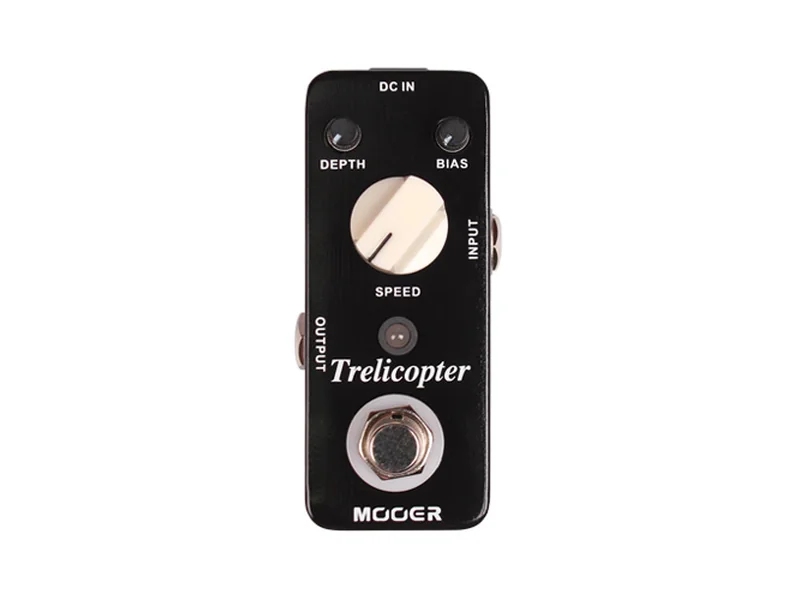
| Mooer Trelicopter | Optical | China | €59 |
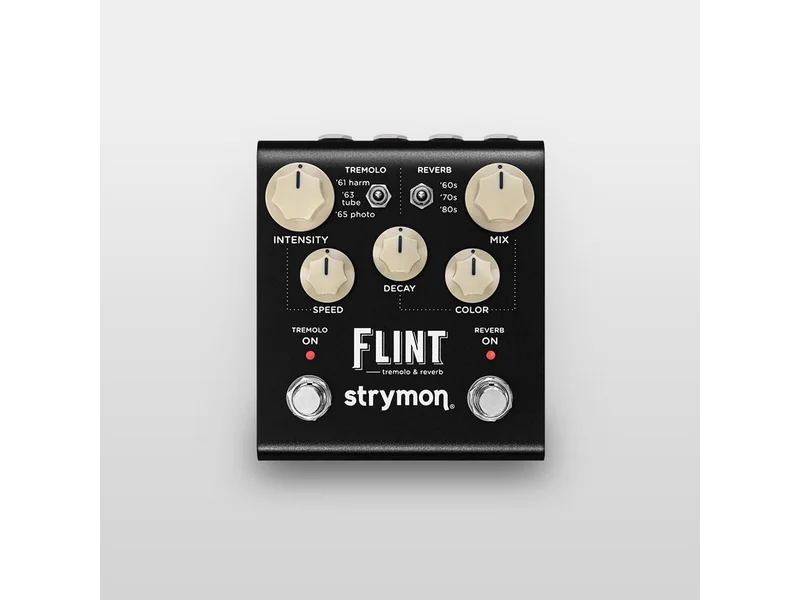
| Strymon Flint V2 | Optical | USA | — |
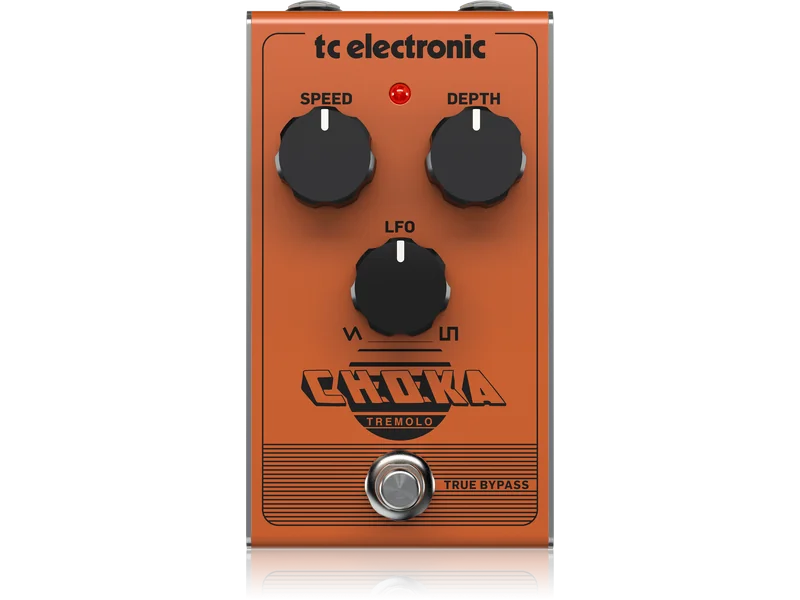
| TC Electronic Choka Tremolo | Optical | Denmark | €28 |
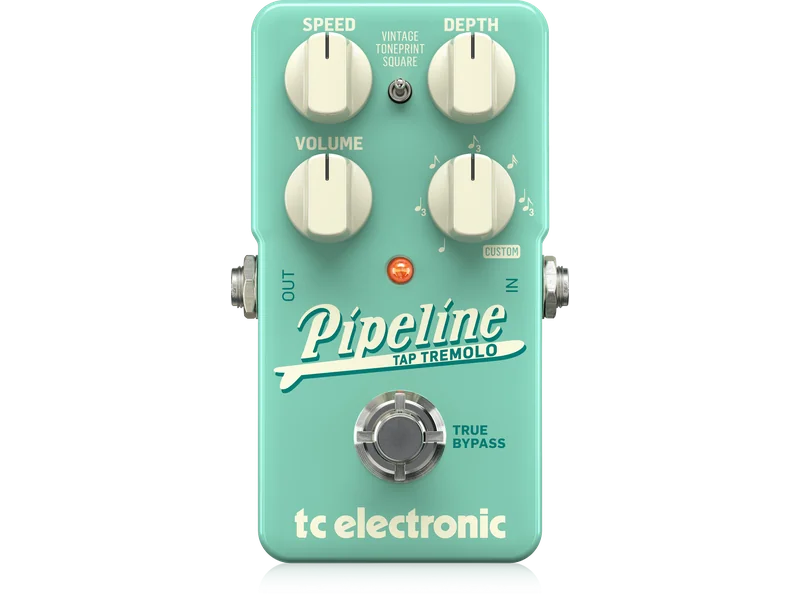
| TC Electronic Pipeline Tap Tremolo | Harmonic | Denmark | €89 |
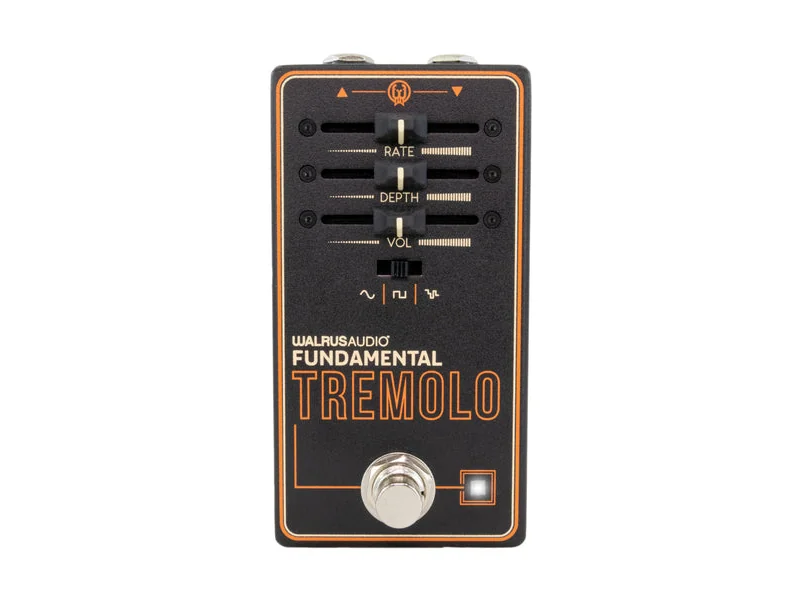
| Walrus Audio Fundamental Tremolo | Optical | USA | — |
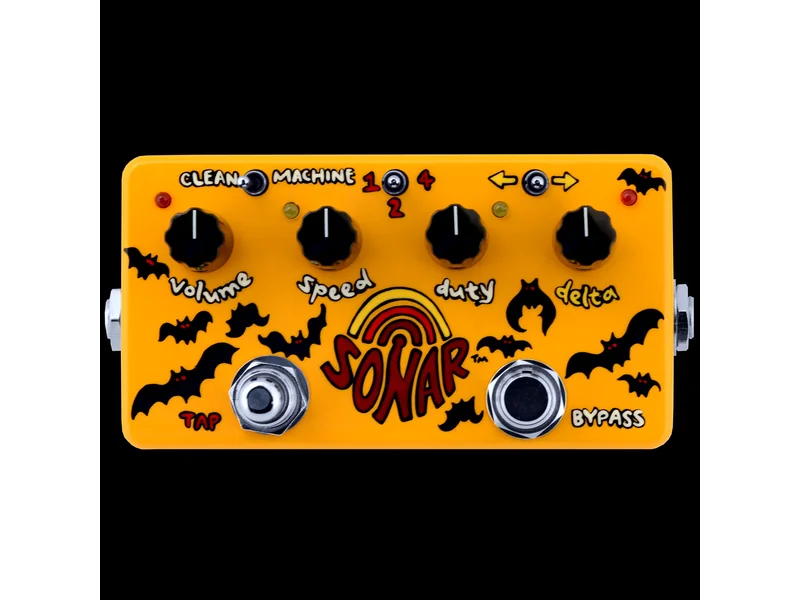
| Zvex Sonar | Optical | USA | — |