Recommended Pedals
The essential Volume pedals to know about
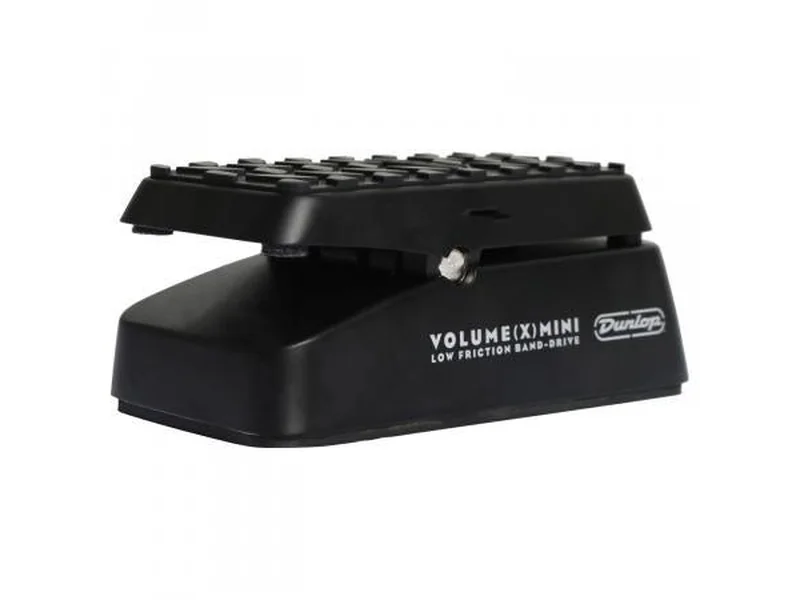
Dunlop DVP4 Mini Volume/Expression
Compact, reliable, smooth operation. The industry standard for volume control. Built to last.
Ernie Ball VP Jr
The classic volume pedal design. Smooth, consistent, with stereo input option. Used by professionals worldwide.
Mission Engineering VM-1
Premium build quality, adjustable tension, internal dip switches. Maximum control for serious players.
Boss FV-500H
Heavy-duty construction, rack-mountable design. Built like a tank for touring reliability.
Volume pedals are among the most useful yet underutilized effects. They provide foot-controlled volume adjustment, enabling dynamics management, volume swells, solo boost, and feedback control that would otherwise require amp adjustments or a second player. Understanding how volume pedals work—and how to use them—gives you unprecedented control over your guitar's output.
Understanding Volume Pedals
A volume pedal is essentially a foot-controlled potentiometer. As you rock the pedal, it increases or decreases the signal level passing through. Simple in concept, powerful in application.
How Volume Pedals Work
The potentiometer inside the pedal attenuates signal. When the pedal is at full tilt, full signal passes. At minimum, signal is cut. The taper determines how the volume changes—linear vs. logarithmic.
Types of Volume Pedals
Passive pedals: Require no power. The signal passes through the pot always. Simple but can affect tone.
Active pedals: Require power. More consistent volume sweep, better tone maintenance.
Buffered pedals: Include buffer to prevent tone loss. Better for long cable runs.
Key Features
Potentiometer Taper
How volume changes as you rock the pedal:
Linear taper: Volume changes evenly across the sweep.
Audio taper: Volume changes more gradually at low settings, matches how our ears perceive volume.
** adjustable:** Some pedals let you choose or adjust.
Impedance
How the pedal affects your signal:
High impedance: Can darken tone with certain setups.
Low impedance: Maintains tone better.
Buffer integration: Solves impedance issues.
Bypass Options
How the pedal engages:
Passive through: No bypass, always in circuit.
True bypass: Pedal completely removed when disengaged.
Buffered bypass: Signal passes through buffer when engaged/disengaged.
Placement Strategies
At End of Chain
Controlling overall rig volume:
- Controls your entire signal
- Use as master volume
- Adjust for different song sections
Before Drives
Controlling input to dirt pedals:
- Changes how drives respond
- Can clean up overdrives
- Affects gain saturation
After Drives
Controlling post-dirt signal:
- Maintains drive character
- Controls volume into amp
- Use for solo boost
Two-Volume Setup
Using two pedals:
- One for overall volume
- One for drive input
- Maximum flexibility
Creative Applications
Volume Swells
Creating bowed-string sounds:
- Start at zero
- Fade in note
- Maintain sustain
- Requires smooth pedal
Solo Boost
Adding volume for leads:
- Set rhythm volume
- Rock pedal up for solo
- Creates instant boost
Feedback Control
Managing amp feedback:
- Reduce volume to control feedback
- Useful in resonant venues
- Maintains playing
Clean/Dirty Swells
Combining with drives:
- Swell into drive
- Creates unique textures
- Requires practice
Signal Chain Considerations
Cable Length
Long cables affect tone:
- Use buffers for long runs
- Quality cables matter
- Consider wireless
Pedal Order
Where volume sits affects function:
- Experiment for your rig
- Different positions create different effects
- Trust your ears
Top Volume Pedals
Best Overall: Dunlop DVP4
The DVP4 combines compact size with reliable operation. Smooth sweep, built-in expression capability, and Dunlop's legendary build quality. The standard for volume control.
Best Classic: Ernie Ball VP Jr
The classic design used by countless professionals. Smooth operation, stereo inputs, proven reliability. A timeless design.
Best Premium: Mission VM-1
Premium construction with adjustable tension. Internal switches for customization. The choice for players who demand maximum control.
Best Value: Boss FV-500H
Boss build quality at accessible price. Heavy-duty design, consistent operation. Great for touring.
Care and Maintenance
Keeping Your Pedal Working
- Keep pedal pivots clean
- Check potentiometer periodically
- Use quality power if active
- Avoid extreme conditions
Troubleshooting
- Crackling: Clean potentiometer
- Inconsistent: Check connections
- Tone loss: Add buffer
- Noisy: Check cables
The Bottom Line
Volume pedals provide essential control for dynamics, swells, and feedback management. The Dunlop DVP4 offers the best balance of size and reliability. The Ernie Ball VP is the classic choice. The Mission VM-1 delivers premium control. Whatever you choose, a volume pedal expands your musical possibilities.
Live Volume Price Index
UK & European retailers • Updated daily
| Pedal | Style | Country | Price |
|---|---|---|---|
| Dunlop DVP4 Volume X Mini | Mini | USA | €8 |
| Walrus Audio Canvas Volume Pedal | Pedal | USA | €308 |